Product Overview
Ultrafiltration sits between media filtration and reverse osmosis, and the module is listed under Water Filter Element together with RO and NF elements. Ultrafiltration works on nanometer-level pores: small molecules and solvent pass the membrane while macromolecules, colloid, bacteria and suspended solids are retained, at a working pressure of 0.1-0.5 MPa and pore size 0.03-1 μm. The UF membrane module LF-UF-1060 carries 51 m² of membrane area and 2.5 m³/h design output at 0.1 MPa and 25 ℃, with product water turbidity below 1 NTU.
Basic Technical Parameters
| Model | LF-UF-1060 |
| Membrane area | 51 m² |
| Design output at 0.1 MPa, 25 ℃ | 2.5 m³/h |
| Product water turbidity | Below 1 NTU |
| Housing material | UPVC |
| Casting form | Epoxy resin |
| Inlet / outlet connector | DN50 |
| Seal | O-ring / EPDM |
| Overall dimensions | A 250 mm, B 173 mm, L1 1600 mm, L2 1680 mm |
| Working pressure range | 0.1-0.5 MPa |
Municipal Water Supply And Reclaimed Water Scenario
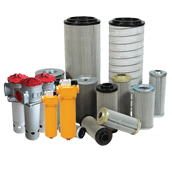
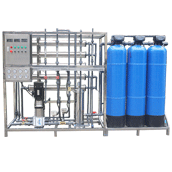
A county waterworks drawing from a river intake needs a barrier for colloid and bacteria before chlorination; LF-UF-1060 modules in a rack give 51 m² each, so a modest skid covers the plant flow while product turbidity stays below 1 NTU regardless of seasonal raw water. At a reclaimed water plant, the same module sits ahead of the RO train to protect membranes from suspended solids and to hold SDI within limits. Because the module tolerates backwash and chemical cleaning, it recovers after high-turbidity events instead of being replaced. Downstream demineralization uses high flow filter cartridge protection and then the RO elements.
Product Advantages
The large 51 m² area in a 1600 mm module reduces module count, piping and footprint on a skid. UPVC shell and epoxy casting resist corrosion in municipal and reclaimed water service, and the DN50 port matches standard rack manifolds. EPDM O-ring sealing keeps the module leak-free through repeated backwash cycles. Product turbidity below 1 NTU gives a measurable barrier claim for bacteria and colloid rather than a nominal pore statement. Full systems are shown under hydraulic filter cartridge.
Manufacturer And Factory Strength
The membrane workshop runs hollow-fiber spinning, potting and integrity testing, and modules are checked for flux and turbidity before dispatch. The same plant supplies the matched filter cartridge pretreatment range, so a plant does not split responsibility between suppliers. For rack layout and backwash design, contact our engineering team.
FAQ
Q1: What pore size does ultrafiltration use?
A1: Typically 0.03-1 μm, which retains suspended solids, colloid, bacteria and macromolecular organics while passing water and small solutes.
Q2: What output does LF-UF-1060 give?
A2: 2.5 m³/h at 0.1 MPa and 25 ℃ with 51 m² area; output rises with pressure inside the 0.1-0.5 MPa range.
Q3: Can UF replace RO for desalination?
A3: No; UF removes particles and colloid but not dissolved salt. RO or NF is required for desalination, with UF as pretreatment.
Q4: How is the module cleaned?
A4: By backwash and chemical cleaning; the module tolerates oxidants better than many polymer membranes, but chlorine exposure should still be controlled.
Q5: Is the module suitable for seawater pretreatment?
A5: Yes as a particle barrier ahead of SWRO, provided material compatibility and cleaning regime are confirmed for the site.
Reference: GB/T 34242 ultrafiltration membrane module performance test | Water Filter Element catalogue reference
{sval:sql sql='SELECT n_parameter FROM dede_addonarticle WHERE aid = ~aid~ ' } {/sval:sql}
{sval:sql sql='SELECT n_parameter FROM dede_addonarticle WHERE aid = ~aid~ ' } {/sval:sql}